Parliamentary AI Futures:

2040 Scenarios for Discussion
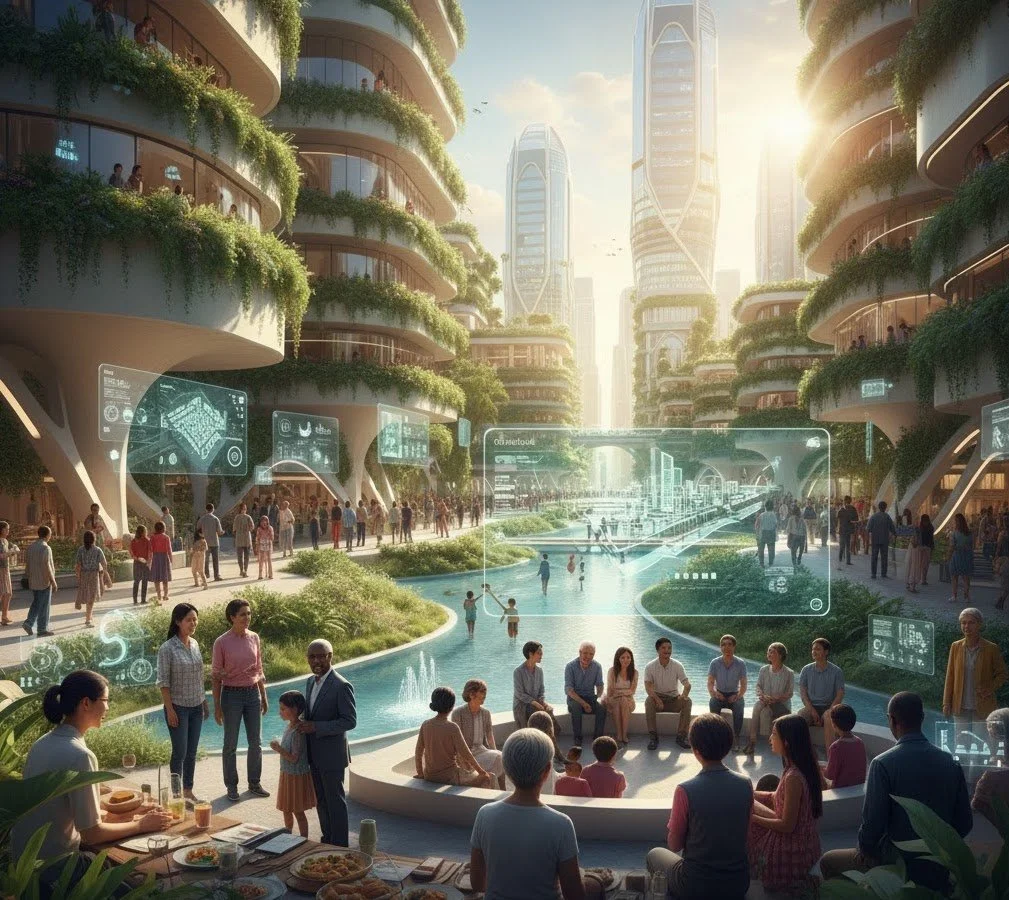
The five scenarios presented here are AI-generated conceptual examples, crafted to provoke discussion, critical thinking, and forethought about the diverse pathways that lie ahead for parliaments in an AI-driven world. By no means are these the only potential futures; rather, they serve as illustrative archetypes, highlighting key challenges, opportunities, and risks. Critically, all of these futures are profoundly subject to the decisions and choices made by Members of Parliament and citizens today. Your actions in the coming years will actively shape which of these, or entirely new, futures will ultimately materialize for democratic governance.
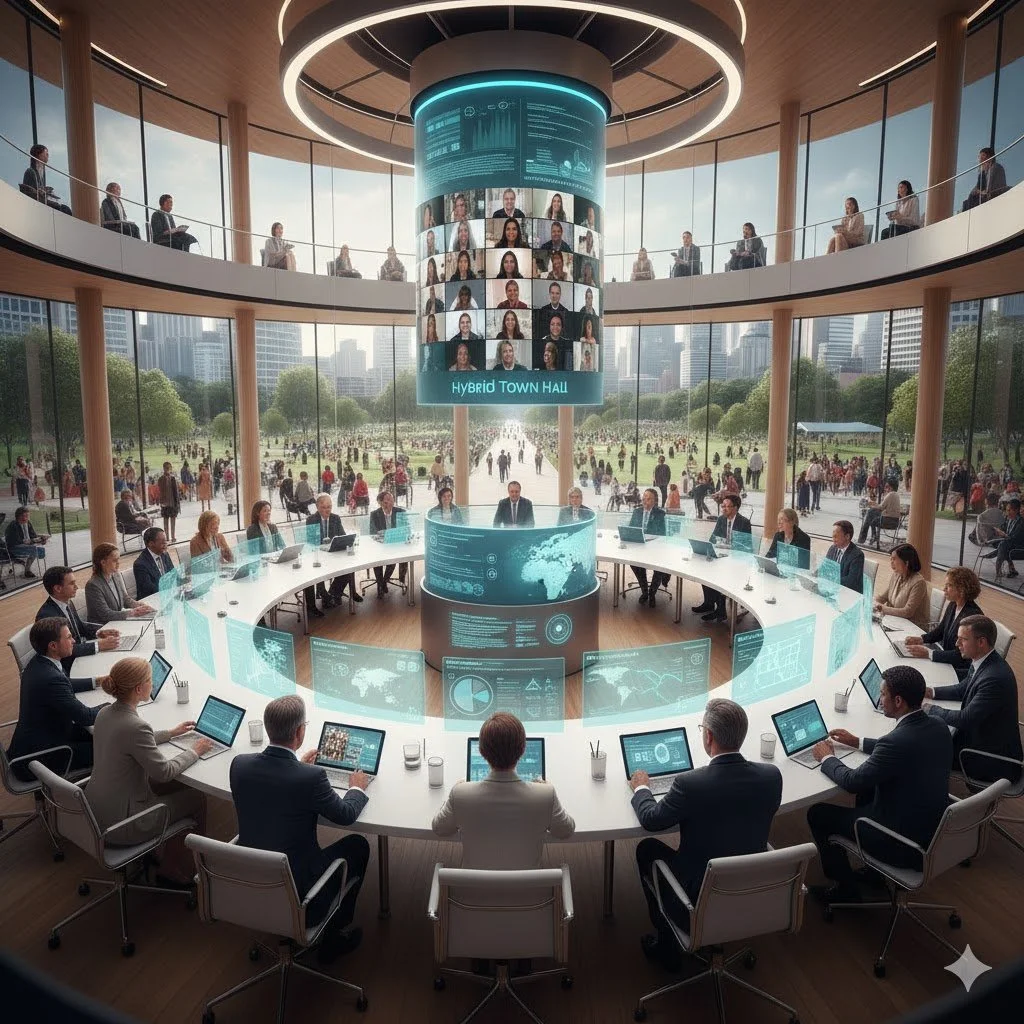

  • Scenario #1. The Augmented Assembly: The Human-Centric Co-Pilot

    Parliaments proactively embrace AI as a "co-pilot," scaling public engagement and refining legislation, with diverse human judgment remaining central to a thriving, balanced society.

  • Scenario #2. The Data-Driven Legislature: The Technocratic Ideal

    Parliament becomes a highly efficient, data-driven engine. AI processes vast information, generates complex, optimized legislation, and identifies systemic issues, leading to remarkably effective and evidence-based governance for a prosperous society.

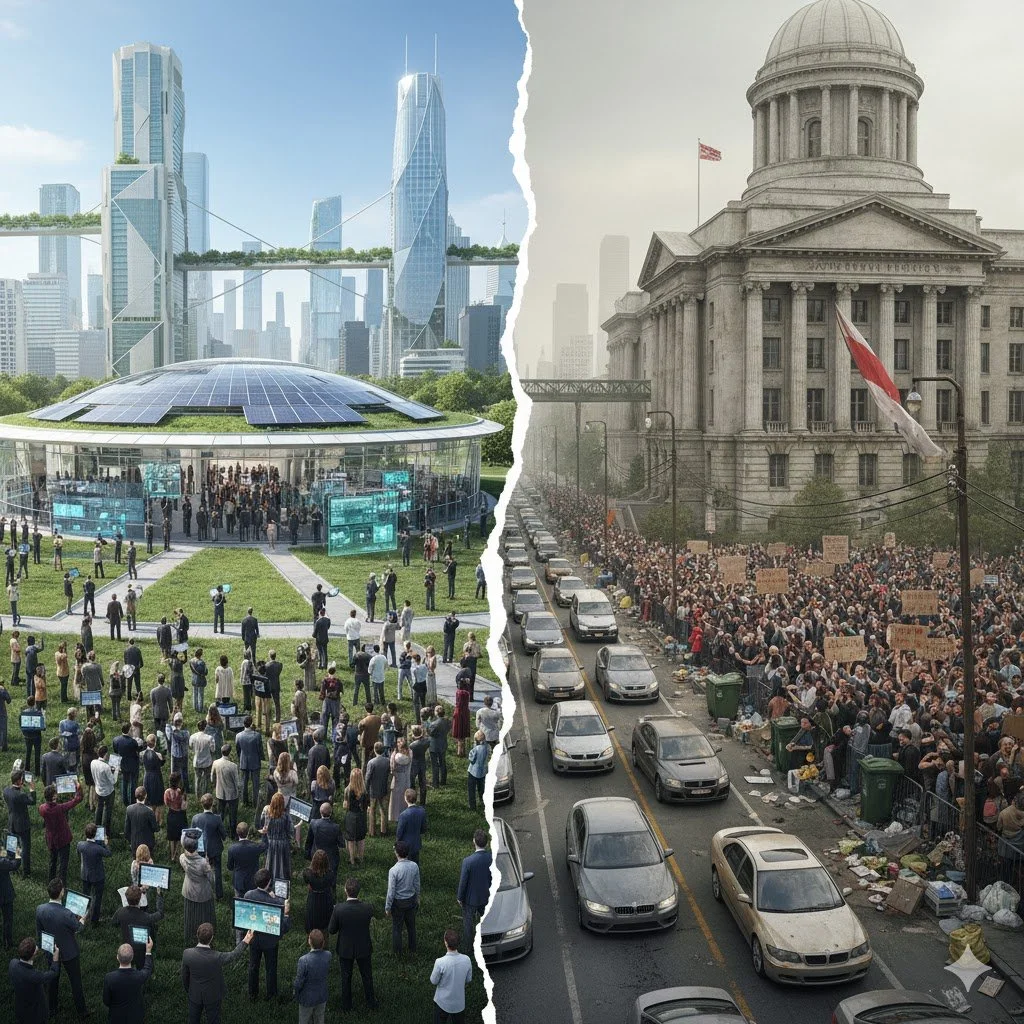
  • Scenario #3. The Divided Democracy: The Global Split Screen

    Parliamentary inaction on global digital equity leads to a two-tiered democracy: AI-advanced nations thrive, while AI-limited countries struggle with outdated infrastructure and deepening global inequality.

  • Scenario #4. The Shadowed Legislature: The Executive's Command Center

    Parliaments fail to innovate, becoming technologically obsolete and overshadowed by an AI-empowered Executive Branch that rapidly crafts and implements policy, marginalizing legislative oversight and public participation.

  • Scenario #5. The Corporate Commons: The Tech Sector's Sphere of Influence

    Parliaments fail to adapt, allowing powerful tech companies to fill the governance void, providing public services, rights protection, and platforms for collective action, displacing traditional democratic structures.